
Introduction
If you’ve ever wondered why some websites consistently appear at the top of search engine results while others struggle to attract visitors, the answer often starts with one crucial element: keyword research.
Keywords are the words and phrases people type into search engines when they’re looking for information, products, or services. Choosing the right keywords helps search engines understand your content and connect it with users who are actively searching for what you offer.
However, effective keyword research isn’t about choosing the most popular search terms. It’s about understanding your audience, identifying their search intent, and selecting keywords that match your business goals.
Whether you’re launching a new website, writing blog posts, managing an eCommerce store, or improving your company’s online visibility, this guide will walk you through the process of selecting the right keywords for better search rankings and more qualified website traffic.
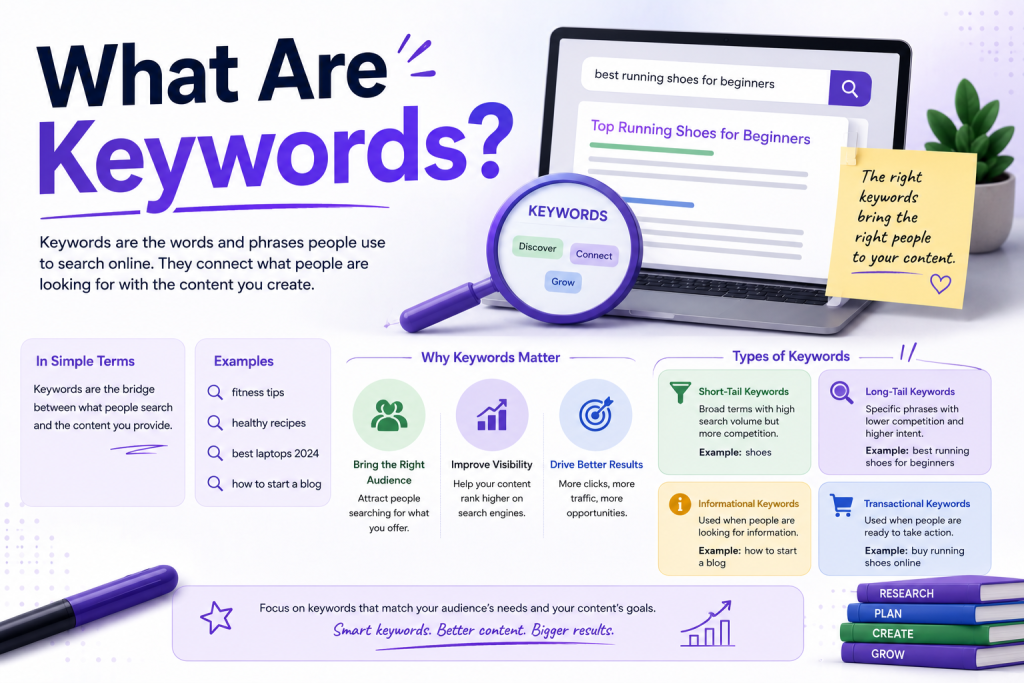
What Are Keywords?
Keywords are the phrases users enter into search engines to find answers to their questions or solutions to their problems.
For example, someone looking to improve their website might search for:
- Best SEO tips for beginners
- Digital marketing agency near me
- How to increase website traffic
- Affordable website design services
- Local SEO for small businesses
Each search represents a specific need or intention. Your goal is to create content that matches those searches.
Why Keyword Research Matters
Keyword research is the foundation of every successful SEO strategy.
Selecting the right keywords helps you:
- Increase organic website traffic
- Reach the right audience
- Improve search engine rankings
- Generate higher-quality leads
- Create relevant content
- Increase conversions
- Stay ahead of competitors
Without proper keyword research, even well-written content may struggle to attract visitors.
Understanding Search Intent
Before choosing a keyword, it’s important to understand why someone is searching for it. This is known as search intent.
There are four main types of search intent:
1. Informational Intent
Users are looking for knowledge or answers.
Examples:
- What is SEO?
- How does email marketing work?
- Website optimization tips
2. Navigational Intent
Users want to find a specific website or brand.
Examples:
- Google Analytics login
- Canva templates
- WordPress dashboard
3. Commercial Investigation
Users are researching before making a purchase.
Examples:
- Best CRM software
- Top email marketing tools
- Website builder comparison
4. Transactional Intent
Users are ready to take action.
Examples:
- Buy running shoes online
- Hire an SEO consultant
- Book website design services
Choosing keywords that align with your business objectives ensures you’re attracting visitors who are more likely to convert.

Start by Understanding Your Audience
The best keywords come from understanding your customers.
Ask yourself:
- What problems do they face?
- What questions do they ask?
- What products or services are they searching for?
- Which words would they naturally use?
Customer feedback, sales conversations, support emails, and online reviews are excellent sources of keyword ideas.
Brainstorm Seed Keywords
Seed keywords are the broad terms related to your business.
For example, if you own a digital marketing agency, your seed keywords might include:
- SEO
- Content marketing
- Social media marketing
- Website design
- Google Ads
- Email marketing
- Branding
These broad topics become the starting point for discovering more specific keyword opportunities.
Focus on Long-Tail Keywords
Many beginners make the mistake of targeting highly competitive, short keywords.
Instead, focus on long-tail keywords—more specific search phrases that usually have lower competition and higher conversion potential.
For example:
Instead of:
SEO
Use:
- SEO tips for small businesses
- Local SEO services for restaurants
- Beginner’s guide to SEO
- Affordable SEO agency for startups
Long-tail keywords attract visitors who know exactly what they’re looking for.
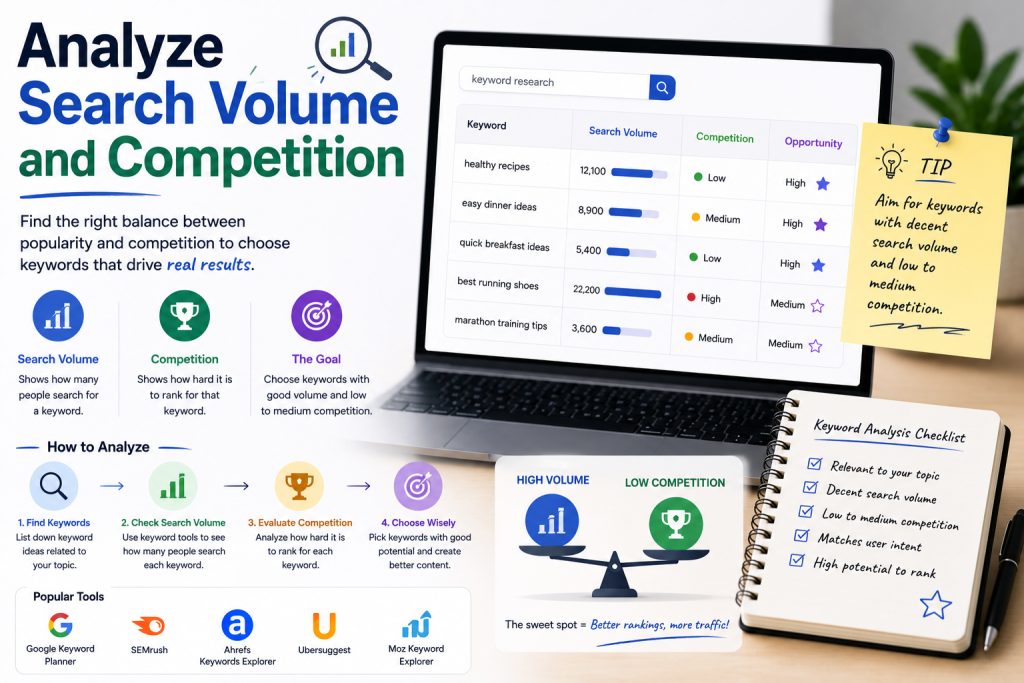
Analyze Search Volume and Competition
Not every keyword is worth targeting.
Consider three important factors:
Search Volume
How many people search for the keyword each month?
Higher search volume can mean more traffic but also more competition.
Competition
How difficult is it to rank for that keyword?
New websites should prioritize lower-competition opportunities.
Relevance
The keyword should closely match your products, services, or expertise.
A highly relevant keyword with moderate search volume often delivers better results than a popular but unrelated term.
Study Your Competitors
Competitor analysis can reveal valuable keyword opportunities.
Review websites that rank well in your industry.
Look at:
- Blog topics
- Page titles
- Meta descriptions
- Headings
- Frequently published content
This doesn’t mean copying competitors. Instead, identify gaps where you can provide more comprehensive, helpful, or up-to-date information.
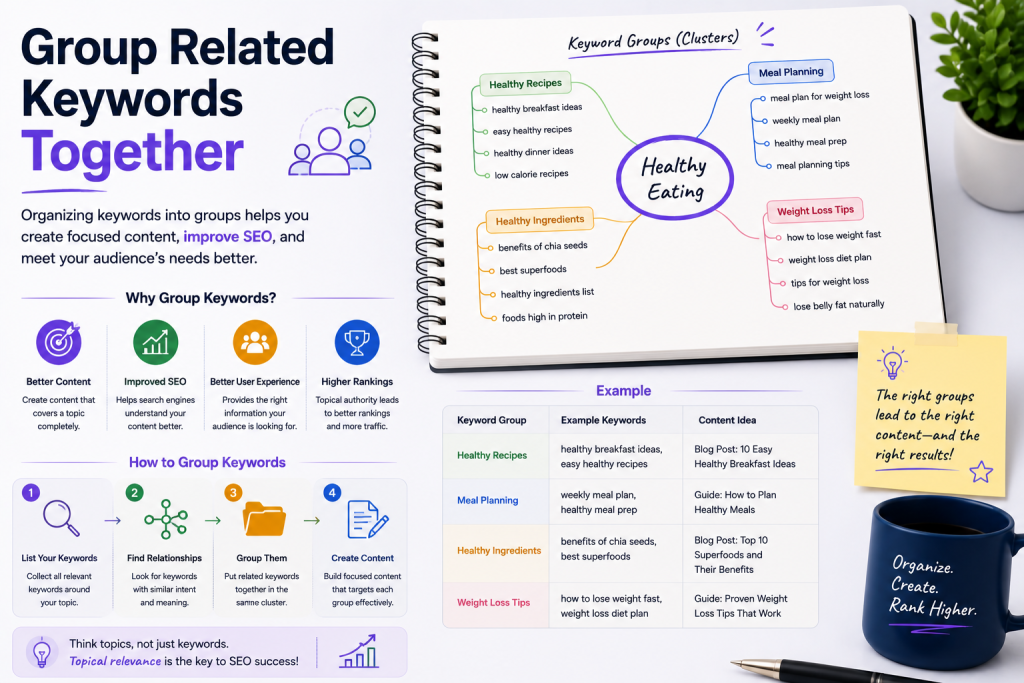
Group Related Keywords Together
Rather than creating separate pages for every small keyword variation, group similar keywords into one comprehensive piece of content.
For example, one article about website SEO could naturally include related terms such as:
- On-page SEO
- SEO optimization
- Improve Google rankings
- Website traffic
- Search engine optimization tips
This approach creates more valuable content while reducing keyword cannibalization.
Avoid Keyword Stuffing
Years ago, repeating keywords excessively could improve rankings. Today, it harms readability and may negatively affect SEO.
Instead of forcing the same keyword repeatedly:
Write naturally.
Use:
- Synonyms
- Related phrases
- Semantic keywords
- Conversational language
Your content should prioritize user experience over keyword repetition.
Optimize Key Areas of Your Content
Once you’ve selected your keywords, place them naturally in important locations.
Include your primary keyword in:
- Page title
- Meta description
- Main heading (H1)
- First paragraph
- Subheadings where appropriate
- Image alt text
- URL
- Conclusion
Use secondary keywords throughout the article where they fit naturally.
Create Helpful, High-Quality Content
Keywords alone won’t guarantee rankings.
Search engines prioritize content that genuinely helps users.
Ask yourself:
- Does this answer the searcher’s question?
- Is the information accurate?
- Is the content well organized?
- Have I provided practical advice?
- Would I find this useful if I searched for this topic?
High-quality content naturally performs better over time.
Monitor Your Results
Keyword research isn’t a one-time task.
Track your performance by monitoring:
- Organic traffic
- Search rankings
- Click-through rate (CTR)
- Bounce rate
- Time on page
- Conversions
Regular analysis helps you identify which keywords are performing well and where improvements are needed.
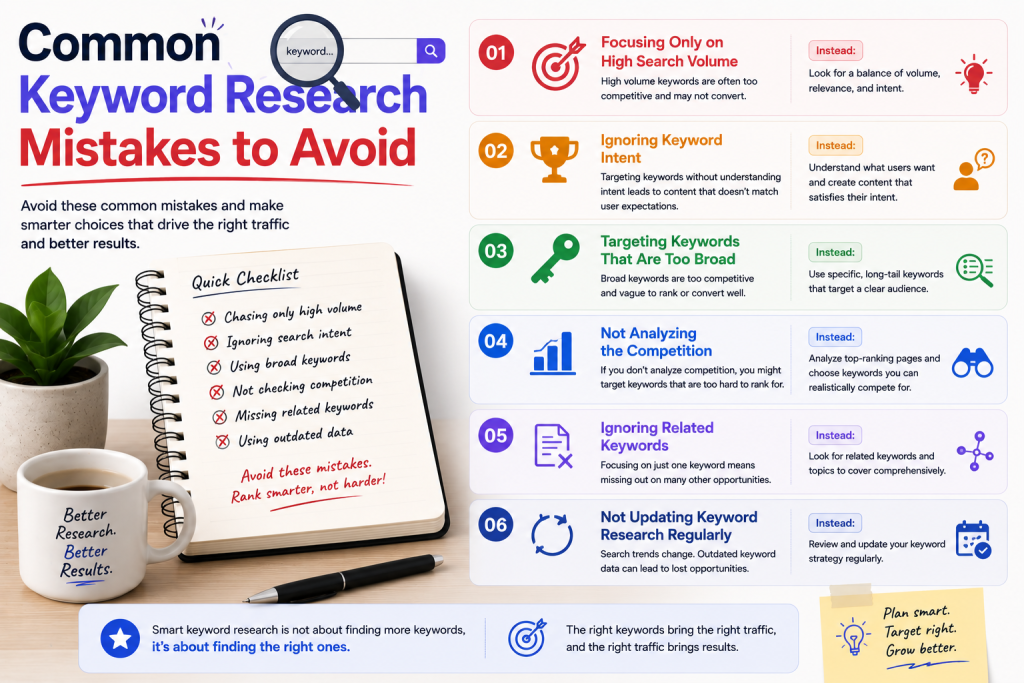
Common Keyword Research Mistakes to Avoid
Many businesses limit their SEO success by making avoidable mistakes.
Avoid:
- Targeting only high-volume keywords
- Ignoring search intent
- Choosing irrelevant keywords
- Stuffing keywords unnaturally
- Creating duplicate content
- Neglecting long-tail opportunities
- Failing to update older content
- Ignoring competitor research
Effective keyword selection requires both research and strategy.
Tips for Better Keyword Research
To improve your keyword strategy:
- Think like your customers.
- Focus on solving real problems.
- Prioritize quality over quantity.
- Target long-tail keywords.
- Create comprehensive content.
- Refresh existing articles regularly.
- Build internal links between related pages.
- Measure results and refine your strategy over time.
SEO is an ongoing process, and continuous improvement leads to sustainable growth.
Conclusion
Choosing the right keywords is one of the most important steps in building a successful SEO strategy. Rather than chasing the most popular search terms, focus on understanding your audience, identifying their intent, and selecting keywords that align with your business goals.
A thoughtful keyword strategy helps attract qualified visitors, improve search engine visibility, and create content that answers the questions your audience is already asking. By combining keyword research with valuable, well-structured content and regular performance analysis, you can build a website that continues to grow its organic traffic over time.
Remember, successful SEO isn’t about tricking search engines—it’s about helping people find the information they need. When your content genuinely serves your audience, the right keywords become a bridge between your expertise and the customers searching for it.